Photo credit: Cool Car Design
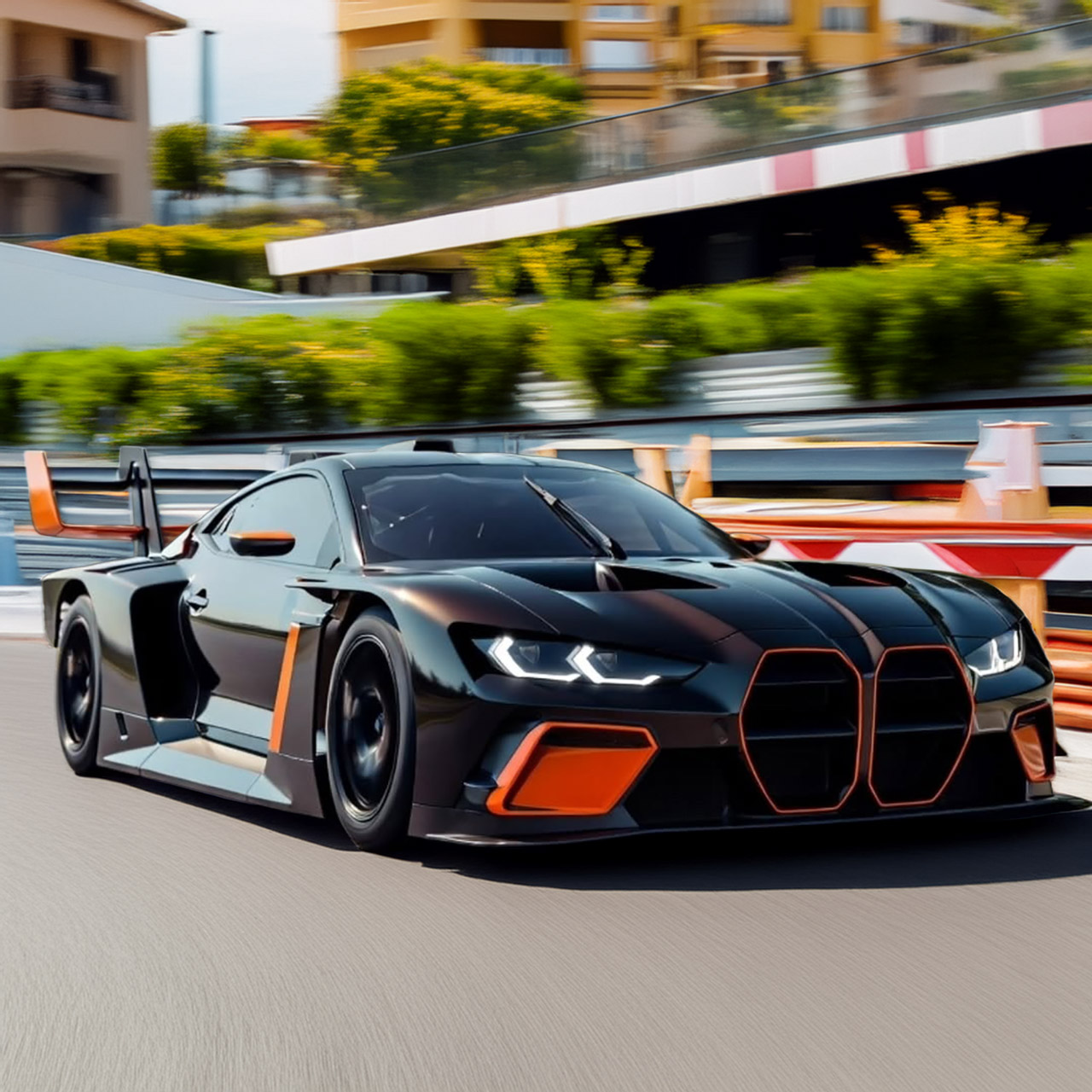
BMW created the original M1 in the late 1970s, a daring, mid-engine supercar with cutting lines and blistering performance that left a lasting impression wherever it went. Fast forward to now, and a new digital concept has rekindled the moniker, transforming it into a prospective flagship supercar.

Those wide fenders are so striking that they make the car appear to be firmly planted on the road, even as it’s speeding down the highway. The side skirts are low and broad, requiring you to climb over them to get out of the car, similar to trying to wriggle into a race car. A flat nose leads to a neatly ventilated hood that allows air to flow, as well as a stylish kidney grille that nonetheless identifies the vehicle as a BMW. A massive fixed wing dominates the scene in the back, generating a lot of downforce in tandem with a sharp diffuser.

- 2 BMW toy vehicles for kids – LEGO Speed Champions BMW M4 GT3 & BMW M Hybrid V8 Race Cars for boys and girls aged 9+ and adult car-model collectors
- 2 minifigures – Each of the set’s BMW buildable cars comes with a driver minifigure with a helmet, wig and a wrench for kids to place behind the wheel and race around the track
- Authentic BMW M Motorsport design – Each LEGO BMW toy car features details from the real-life versions, including tailpipes, diffusers, rear wings, the BMW M Motorsport livery and interior features
The headlights and taillights are reminiscent of the more modern M3 and M4 designs, making it clear that this is a BMW. There’s only one windshield wiper, which is a minimalist touch that reduces everything to the essentials. What about the wheels? They made no fuss, allowing the car’s design to speak for itself.

BMW has a bit of a reputation when it comes to twin-turbo inline-six engines in its M range; you know they’ll be smooth and strong, providing plenty of grunt over a wide rpm range. To make this M1 rebirth genuinely competitive, engineers might increase the output to almost 600 horsepower and then create the chassis and body panels out of lightweight materials like as carbon fibre.

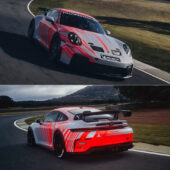
Porsche has already set the standard with the 911 GT3 RS, a vehicle with a rear-mounted engine that can rev up to 9,000 rpm from its 4.0-litre flat-six and produces roughly 525 horsepower. That car can accelerate from 0 to 60 in approximately 3.2 seconds and reach a high speed of around 184 mph while providing plenty of traction thanks to its sophisticated aerodynamics and lightweight structure – it weighs around 3,200 pounds.

A BMW version of this M1 design would equal the intensity in its own unique way, leveraging other capabilities. You’d still have rear-wheel drive, which would provide extraordinarily accurate handling if you’re a talented driver. The suspension would be perfectly tuned for racing circuits, allowing you to perform these ultra-quick direction changes, while carbon ceramic brakes would provide fade-free stopping power lap after lap. Downforce would be critical on courses like the Nürburgring, with the design capable of producing levels of downforce that equal the Porsche’s active aero system.
BMW’s expertise with M hybrids indicates another possibility: what if they could employ some electrified assistance to provide quick torque on demand? Yet maintain that wonderful, rev-happy gas engine that gives you a rush. This sounds like a match made in heaven to me. The price tag would be in the exclusive realm, presumably starting at more than $300,000, to represent the restricted production run and all of the exotic components employed.
[Source]