
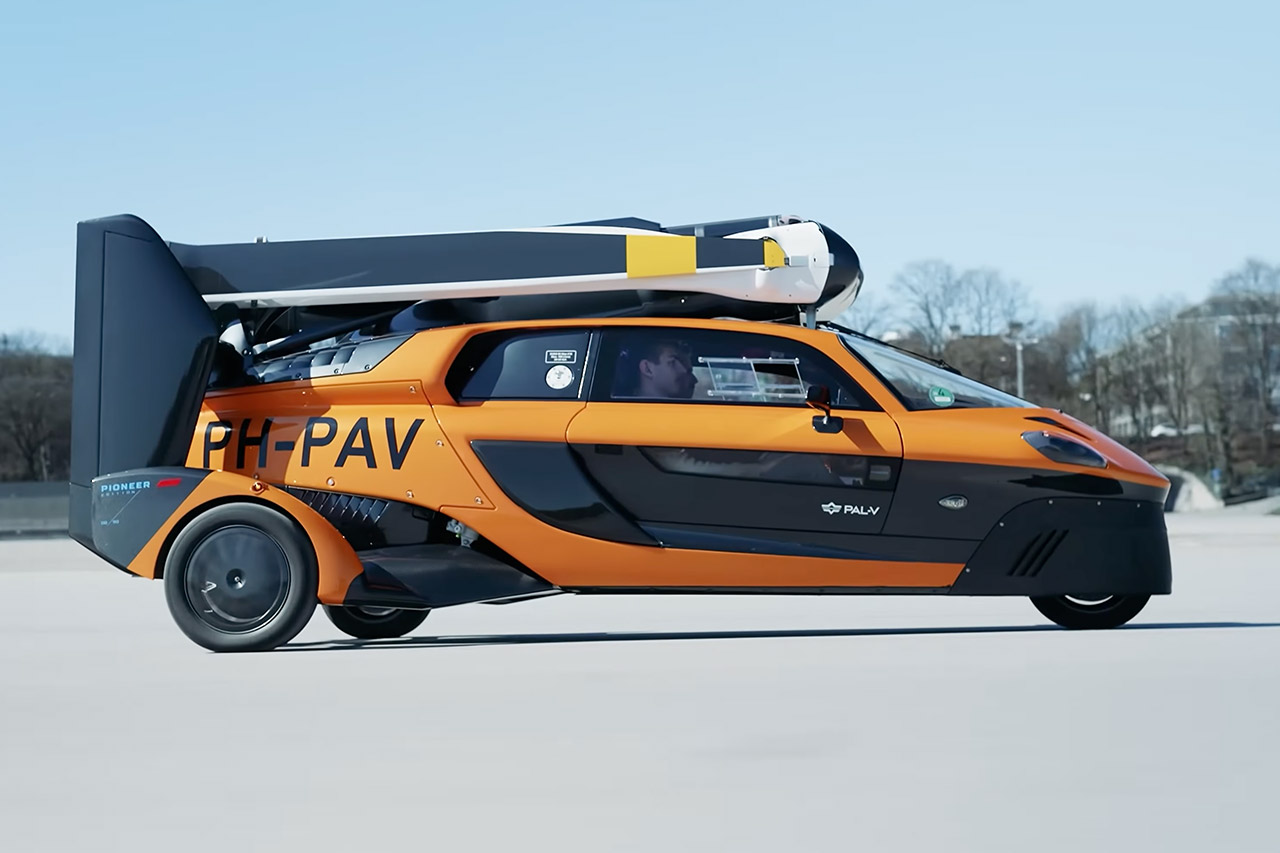
Dutch firm Pal-V has spent nearly two decades refining a three-wheeled vehicle that drives on roads and flies as a gyroplane. Its Liberty model now holds both automotive production approval from the Netherlands RDW and European Production Organisation Approval from EASA, making it the first in the FlyDrive category to clear those two hurdles. With those papers in hand the company has turned its attention to building the cars at scale.
Liberty relies on tried-and-true gyroplane ideas that just work. The rotor blade and tail pieces fold up, allowing you to park and drive it just like any other tiny automobile. The good news is that you can convert from driving to flying in a matter of minutes, rather than five as stipulated. On the ground, Liberty claims to have an 817-mile range, which is ideal for a road trip. Up at cruising altitude, it appears to be cleared for operations up to 11,000 feet. To drive one, you’ll need a standard license plus a pilot’s certificate, which is a rather common combination, or so we’d like to think.

Veeniix V995 Red Mini Drone for Kids and Beginners | Indoor RC Quadcopter Plane with 3D Flips, 360° Rotation, Circle Fly, Auto Hover, Headless Mode, 3 Batteries, Gift for Boys
- Flight Features: The V995 Red Mini Drone supports Toss to Launch, 3D flips, Auto Rotation, and Circle Fly, making it versatile for fun maneuvers. Adjustable speed settings allow for both indoor and outdoor flying. (Please fully charge the battery before playing.)
- Auto-Hovering & Stability: Equipped with altitude hold, the drone maintains a steady hover height. One-key takeoff and landing simplify operation, ensuring stable and easy control.
- Extended Flight Time: Includes 3 batteries, providing up to 21 minutes of continuous flight. The low battery alarm prevents unexpected power loss, ensuring safer operation.
Pal-V recently stated that they would collaborate with Nobleo Manufacturing in late October 2026, a partner that will assist them in figuring out the manufacturing and digital aspects of things, as well as developing a clear roadmap for moving from the first batch to mass production. This agreement comes after they received EASA Production Organization Approval in September, which allows them to create proper aircraft-grade items in Europe. We also learnt that they received automobile manufacturing approval at some point this year.

People have already paid for some of the first models, so they are reportedly covered for the next few years. They even received a large order from a Dubai operator, totaling over 100 machines. Emergency services and other users want to get their hands on one. These are the folks who see the utility of a machine that can leave the road and travel to locations that most cars cannot. The Liberty still requires full type certification from the regulators, but they want to conduct some flying testing in early cars to help them get there. If all goes as planned, they expect to deliver the first production models in 2028.

For European consumers, the Liberty costs between the mid-to-high six figures, depending on how you want it configured. It’s a two-person automobile with some luggage capacity, and it runs on regular auto gas. The design emphasizes simplicity, with a road-legal frame and a rotor system that tucks away when not in use. Rather than pursuing an electric takeoff concept that will take years to be approved.

After all of the prototype and documentation stages, the project has reached the point where getting the factory organized and the supply chain operational is more critical than debating about the design. Whether they can complete the first production models on time will be determined on how well the work with Nobleo goes and how the final airworthiness testing turn out. As it stands, Liberty’s dual approvals and cooperation with Nobleo are the first signs of actual movement since the project began.


