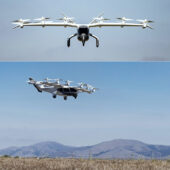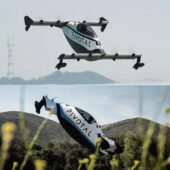
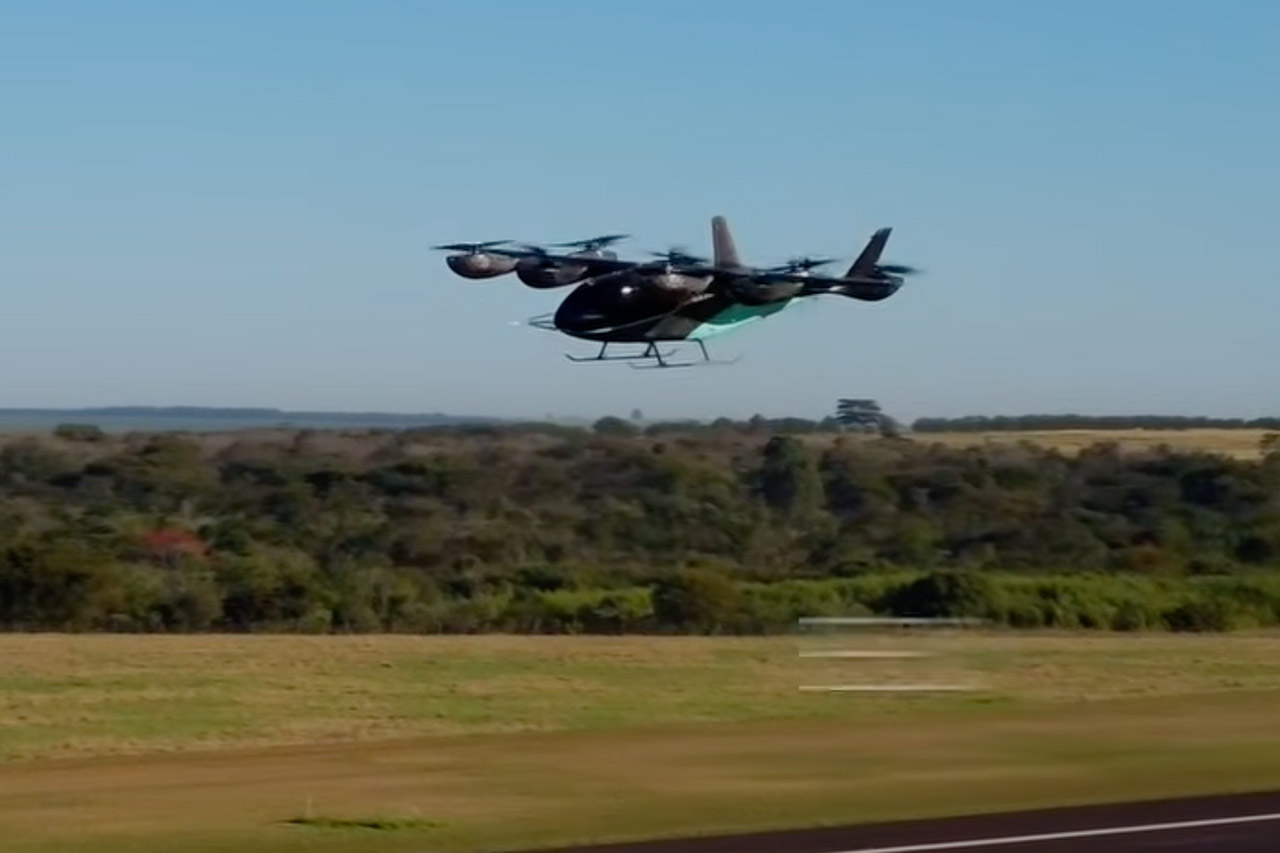
On a quiet Brazilian country airfield, Eve Air Mobility’s near-final engineering prototype accomplished something unprecedented. For the first time, the back pusher propeller was able to accelerate while in flight. That simple change marked the start of the transition phase, in which vertical rotor lift begins to give way to wing lift.
The whole operation lasted 3 minutes and 9 seconds, which is a rather rapid spin in the air. The prototype traveled at a speed of 0.84 nautical miles and reached a height of 90 feet, which was not particularly impressive. But what truly matters is that the prototype was able to abandon pure hover and begin blending its two lift-generating techniques.
Sale

DJI Neo, Mini Drone with 4K UHD Camera for Adults, 135g Self Flying Drone that Follows You, Palm Takeoff, Subject Tracking, QuickShots, Stabilized Video, Built-In Propeller Guard (Controller-Free)
- Due to platform compatibility issue, the DJI Fly app has been removed from Google Play. DJI Neo must be activated in the DJI Fly App, to ensure a better product usage experience, please go to the DJI official website to download the App before use.
- Lightweight and Regulation Friendly - At just 135g, this drone with camera for adults 4K may be even lighter than your phone and does not require FAA registration and Remote ID. Throw Neo in your backpack or even your pocket. Just grab and go!
- Palm Takeoff & Landing, Go Controller-Free [1] - Neo takes off from your hand with just a push of a button. The safe and easy operation of this drone for adults makes it perfect for taking to family BBQs and hiking with friends.
Eve’s team decided to develop this prototype with a lift and cruise architecture in mind. It has eight fixed pitch rotors on the ends of its booms for takeoff, landing, and hovering. A single propeller at the back, driven by dual electric motors to eliminate a single weak point, propels the thing forward, with fixed wings taking over once it reaches a reasonable speed. There are no fancy tilting or folding propellers in flight, and the design is clean and straightforward, with only 8 rotors and a propeller that requires little movement.

All of this occurred at Embraer’s flight testing site in Gavião Peixoto, located in the Brazilian countryside. Same location where the prototype initially appeared in December 2025. They flew 59 low-speed and hover sorties, then updated the software and spent time on the ground before returning to the air in mid-July. Then, by early August, they were ready to test the propeller in flight.
Eve’s chief executive, Johann Bordais, believes this is significant in terms of the development process. He claims that actually operating the propeller while airborne helps to establish the fundamental design concept and puts us one step closer to the ultimate product they intend to deliver. Marcelo Basile, the head of engineering, stated that this flight demonstrated that the propeller was functioning properly and gave all of the data required to gradually expand the flying envelope.

The tough part about any eVTOL like this is getting the transition just right. The rotors must provide lift to the wings simultaneously, as must the control systems, electrical power, and structural loads. Eve’s strategy is to go at a steady pace, gradually increasing the speed and gathering more data as they go. The next targets are around 50 knots, followed by full wing borne flying at more than 85 knots, at which point the rotors will be able to shut down permanently.