
Audi’s newest electric SUV is only available to Chinese buyers. Mat Watson of CarWow just spent time with one, and his observations show a machine that values speed, space, and screens over the refined feel that many associate with German engineering.
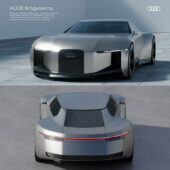
The E7X is the outcome of Audi and SAIC’s collaboration, with the AUDI logo replacing the classic four rings. In China, the Q8 costs around £36,000, although a comparable German-built Q8 costs more than twice that. Start with the exterior, as the E7X is almost the same size as the Q8, but it appears lot cleaner and more modern, which is a plus. Thin Matrix LED headlights form a continuous strip, creating a streamlined appearance. Body panels are wonderfully smooth, with few sharp wrinkles to be found. The 22-inch wheels fill out the arches nicely. Most individuals would struggle to identify the brand without the lettering. The running boards do not retract and are unusually high up, so use caution when entering. The side mirrors have been replaced with cameras, but Watson observed that the feeds lack depth and the camera housings are oversized.
Sale

LEGO Speed Champions Audi Revolut F1 Team R26 Race Car 77259 | Building Toys for Boys & Girls, Ages 10+, Toy Race Car for Pretend Play, Desk Decor, 216 Pieces, Gift for Birthdays
- BUILDABLE LEGO F1 CAR – Kids can bring racing dreams to life with the LEGO Speed Champions Audi Revolut F1 Team R26 Race Car (77259) building toy for boys and girls ages 10 years old and up
- LEGO F1 DRIVER MINIFIGURE – Kids can place the included driver minifigure (wearing a team uniform and helmet) inside the cockpit for pretend play racing adventures
- AUTHENTIC DETAILS – This buildable race car toy features many of the same design details from the real-life version including a cockpit, a rear wing, sponsor logos, front wheel suspension and "Pirelli" tires
$27.99
−$9.30
$18.69

Buy on Amazon

Inside the cabin, technology takes center stage. The dashboard has one big screen and a second display for the front passenger to interact with. The materials are beautiful and pleasant to the touch, giving it a high-end sense. The Alcantara-style headliner gives the whole thing a bit of an expensive feel. We were concerned about the lack of touch controls, but having physical rollers for temperature and fan speed is a relief; at the very least, it’s one piece of technology that feels appropriate. The seats are really comfortable to relax in, and the rear still has enough capacity for three adults, with reclining seats, extendable leg rests, solid tables on the front seat backs, a 21.4-inch screen that folds down from the roof, and a fridge for cold drinks. There’s even a “Boss mode” option that moves the front passenger seat forward, allowing the person sitting in the back to stretch out.

In terms of practical space, the E7X does well. There is plenty of room for everyone in the back, including plenty of knee and headroom. The floor remains flat. The boot can hold 680 liters of luggage, which is almost 10% more than a Q8, and the air suspension allows you to lower the car, making it much easier to get big items in. There’s also a little front boot to store extra items. The automatic doors open and close with quick-acting sensors. One of Watson’s main complaints about the packing is that a family-sized SUV like this should have a glovebox, and it’s unfortunate that the rear seats are sluggish to fold, especially since the front passenger seat is a little too far back.

Out on the road, the two motors provide a massive 680 horsepower and 800 Newton-meters of torque. Watson tested the E7X against a 286-horsepower diesel Q8. The electric vehicle flew off the line, reaching 60 mph in 4 seconds and covering the standing quarter-mile in little over twelve. The braking distances from 62 mph were practically identical to the diesel Q8. The turning circle, meanwhile, is an outstanding 10.5 meters, thanks to rear-wheel steering that is tighter than many smaller hatchbacks.

In terms of real-world efficiency, it appears that we are not quite reaching the advertised 400 miles per 100kwh battery. A more realistic estimate of 2.6 miles per kilowatt-hour places it about 260 miles. However, the 900-volt system’s standout feature is rapid charging, which adds 200 miles in roughly ten minutes, which is a significant advantage for long trips.