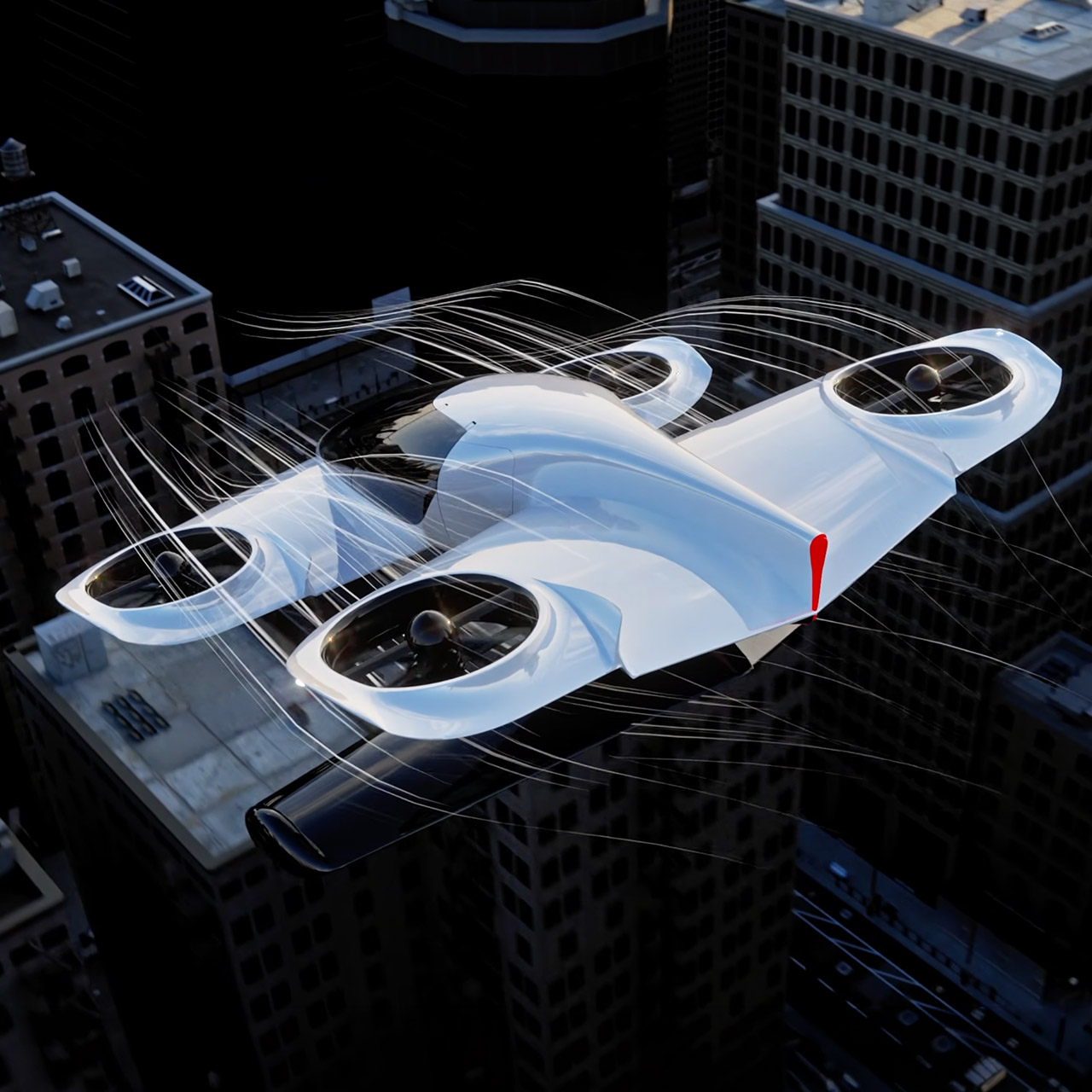
Florida’s Doroni Aerospace spent years designing a two-seat electric aircraft that could lift off from a driveway and land back home without needing a runway or a pilot’s license measured in hundreds of hours. On August 5 the Federal Aviation Administration finally gave that vision a real regulatory foundation.
MOSAIC, the agency’s new standards for the Modernization of Special Airworthiness Certification, went into force that day. For the first time, the Light Sport Aircraft category officially includes electric powered-lift machines, which, to be honest, its previous rules had not been designed to cover. Companies like Doroni, attempting to break into the market with their new-fangled ducted fans, dual axis propulsion, and teeny-tiny aircraft that can fit in your average suburban garage, were left navigating a minefield of completely out-of-date language that simply wasn’t designed to handle aircraft like the H1-X. The good news for aircraft makers is that MOSAIC adds much-needed clarity and certainty to the process by establishing a defined set of standards and best practices that can be implemented. It may not provide credentials overnight, but it does provide a clear picture of what you need to achieve.

HOVERAir X1 Drone with Camera, Follow-me Drone with Self-Flying Mode
- Intelligent Follow-Me Camera: Harnessing advanced tracking algorithms and a following speed of up to 15 mph, the HOVERAir follow-me self-flying drone becomes your intuitive cameraman, seamlessly tracking your every move. Suitable for cycling, skateboarding, and various sports, it effortlessly captures breathtaking moments, ensuring you're always at the center of the action
- App Compatibility: HOVER X1 app supports Android 10.0 and above, and iOS 12.1 and above, ensuring seamless connectivity and control across a wide range of mobile devices
- Automatic and Intelligent Flight Paths: Experience hands-free flying with the pre-programmed flight paths, including Hover, Follow, Zoom Out, Orbit, Bird's Eye, Manual Control, and more. Take control with Manual Control mode, tailoring your flight experience to perfection. With each battery supporting approximately 20 intelligent flight paths (11 minutes), your 100% flight time is dedicated to creating captivating and shareable content
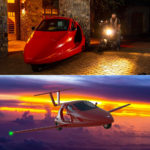
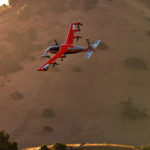
Doroni designed the H1-X from the beginning as a personal flying machine rather than an air taxi fleet aircraft. Their tandem wing design, with multiple ducted fans for lift and a separate forward thrust system for cruise, allows this thing to seamlessly transition from hovering to cruising while remaining compact enough to fit in a standard suburban driveway, or even garage, with room for a pilot, one passenger, and approximately 500 pounds of people and gear. They’re claiming a top speed of 120 mph, a cruising of 95 mph, and a goal range of 100 miles on a 25-minute charge from a standard EV charger. Operating altitudes of 500 to 1500 feet allow you to avoid most obstructions while remaining low enough to provide a reasonable practical range on regional hops.

Inside the H1-X, Doroni’s placed SOUL AI, their own take on the digital co-pilot system. Voice commands allow you to control climate and audio with a few words while also providing real-time data streaming on weather conditions, airspace limits, and nearby charging spots, all on a nice clean interface that only speaks up when something actually needs your attention. As expected, surrounding sensors provide a continuous 360-degree view of the world, with warnings popping up in real-time if anything is a potential risk. For the final safety net, a ballistic parachute is poised to save the day. According to Doroni, the whole experience should be similar to driving a well-organized vehicle rather than flying a general-aviation aircraft, and under the new MOSAIC guidelines, training for a Sport Pilot certificate might be as little as 25 hours.

Not unexpectedly, the momentum on the ground has been rather impressive. With over 70 successful test flights now under its belt, all on previous prototypes with special airworthiness certificates, and a full-scale engineering model set to debut in late March at the company’s ‘Soul of the Sky’ event, the excitement is considerable. Over 600 reservation deposits have already been deposited, with a $1,000 deposit per customer and projected retail pricing ranging from $350,000 to $400,000. With almost $30 million in total financing received, they’ll be able to push final engineering through 2026, complete extensive certification testing in 2027, and deliver the first customer aircraft in 2028.
[Source]